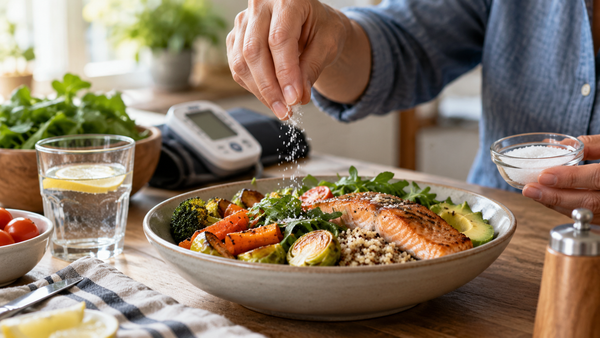
🥩 The Carnivore Diet: Can you survive on a meat-only diet? 🍖⚖️
🥩 Can you live on meat alone? The carnivore diet is all over social media, but what does the science say? Scurvy, zero fibre, bowel cancer and a surprising twist on epilepsy: my new plain-language summary explains it all, with every claim referenced. 🔍 Read it before you ditch your veg! 🥦

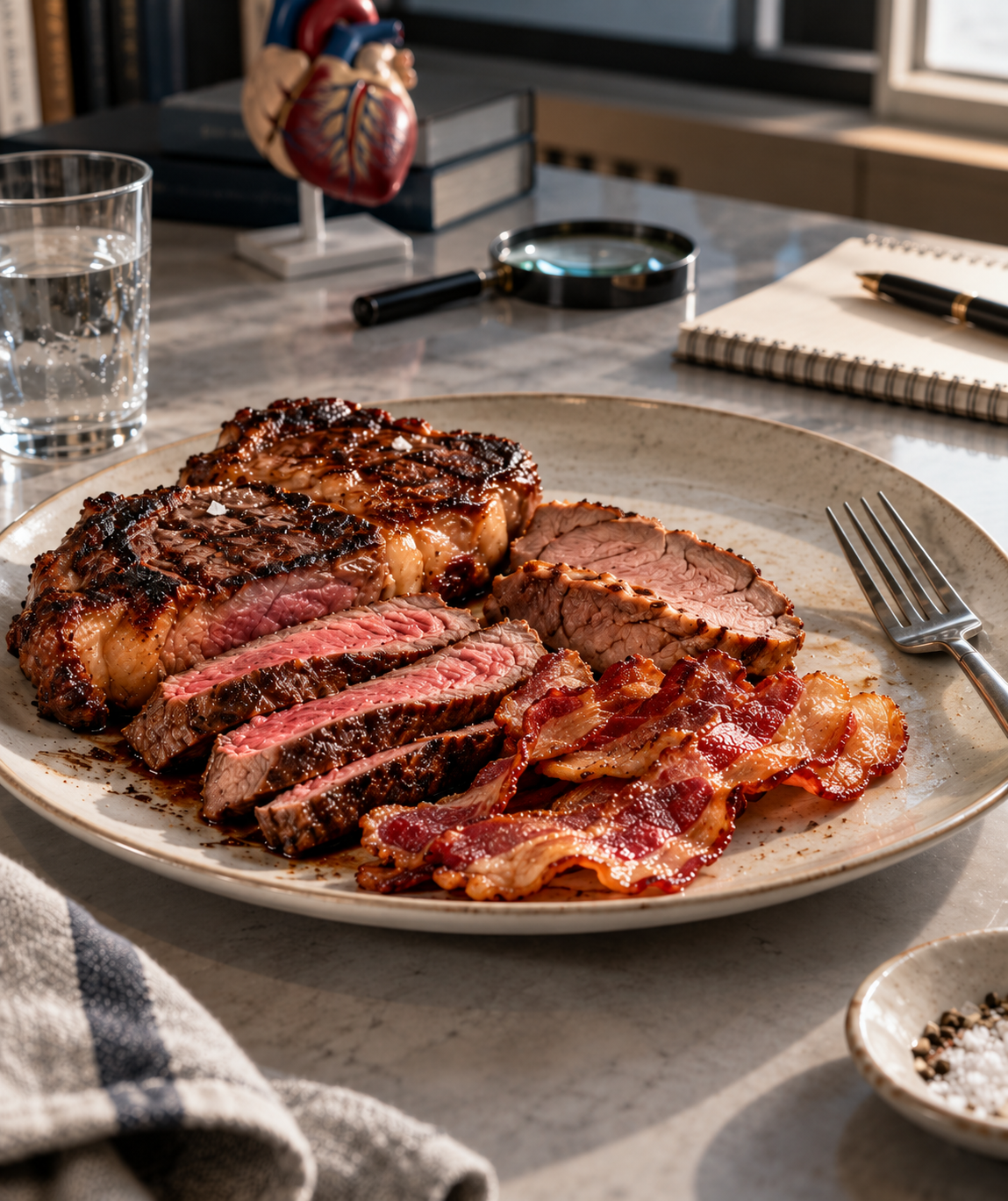
The numbers in brackets, like (5), point to the studies in the reference list at the bottom 📚, so you can dig deeper into anything that sparks your curiosity. 🔍
How strong is the evidence? ⭐ = a summary of many studies (systematic review or meta-analysis); 🔹 = a single study, survey or case report; 🐭 = animal or laboratory research only; 💬 = expert commentary.
⚡ The short version
🥩 The carnivore diet cuts out all plant foods. Only meat, fish, eggs, animal fats and some dairy are eaten. It is low-carb eating taken to the extreme.
📱 The hype comes from social media, not science. Claims of weight loss, better mood and healing of chronic disease rest on personal stories; no controlled studies have tested what happens when people stop eating plants altogether.
🍊 Vitamin C is a real concern. Modelled carnivore meal plans supply far less vitamin C than you need, and too little vitamin C causes scurvy. Liver contains a little vitamin C, but so much vitamin A that it can't safely fill the gap.
🌾 There is no fibre at all. Fibre protects against heart disease, type 2 diabetes and bowel cancer, and feeds the healthy bacteria in your gut.
🎗️ Cancer risk is likely to go up, not down, mainly because of high intakes of red and processed meat, harmful compounds formed during cooking and the lack of fibre.
🧠 Keto-type diets can help some people with epilepsy, and possibly severe mental illness, but only as medically supervised treatments, which are not the same as a self-directed carnivore diet.
⚖️ For long-term health, a varied diet with vegetables, fruit, whole grains and legumes remains the better choice.
🍖 What is the carnivore diet?
The carnivore diet takes low-carb eating to its extreme: all plant foods are excluded, and only foods from animals are eaten, including meat, fish, eggs, animal fats such as lard and ghee, and low-lactose dairy products (1). 💬 It has spread mainly through social media, where influencers such as Brian "Liver King" Johnson promote their own versions (1).
🤔 Why is it appealing?
💬 Supporters argue that:
- 🦴 humans evolved to live mainly on animal foods, eating plants only when meat was scarce;
- 🌾 starchy foods only became common after farming began;
- ☠️ plant "toxins" and pesticide residues harm our health; and
- 🍬 cutting out plants is the easiest way to cut out sugar, and the diet fixes obesity, inflammation, digestive problems and autoimmune disease (1).
⚠️ The evidence says otherwise. These claims rest on anecdotes and testimonials, not controlled studies (1, 2). Our brains, teeth and intestines are those of a flexible omnivore that can get nutrients from both plants and animals (1). 🔹 Our genes agree: populations with traditionally starchy diets carry more copies of the gene for the starch-digesting enzyme in saliva (amylase) than populations that ate little starch (3), and people with more of this enzyme have lower blood sugar after eating starch (4).
🤒 Side effects
💬 Side effects are similar to those of keto diets: bad breath, constipation, diarrhoea, headaches and dehydration. They often ease after about a month as the body adapts to burning fat (1).
🍊 Nutrients, vitamin C and scurvy
✅ Meat, fish, eggs and dairy are excellent sources of high-quality protein, iron, zinc, selenium, iodine, calcium, vitamin D and B vitamins, including vitamin B12 (1).
⚠️ But cutting out plants removes the main sources of potassium, folate and vitamin C. 🔹 When four carnivore meal plans were modelled, all provided less vitamin C than the recommended 45 mg a day (between about 1 and 33 mg), and all were low in thiamin (vitamin B1), magnesium and calcium (5).
❓ "You can get all your vitamins and minerals from meat, if you eat organs too." Some supporters say "nose-to-tail" eating (liver, kidney, heart and muscle meat) covers everything. The evidence doesn't back this up:
- 🔹 Even the modelled meal plans that included organ meats fell short on vitamin C, thiamin, magnesium and calcium, and some were low in folate, iodine and potassium (5).
- 🦌 Liver is not a safe vitamin C supplement. Raw reindeer liver contains only about 12 mg of vitamin C per 100 g (an orange has about 50 mg), and the amount varies a lot between animals. The same 100 g contains about 21,000 µg of vitamin A, roughly 23–30 times what you need in a day (6). Eating enough liver to meet your vitamin C needs would far exceed the safe upper limit for vitamin A (3,000 µg a day) (7), which is especially dangerous in pregnancy because too much vitamin A can cause birth defects.
- 🔹 The largest survey of carnivore dieters relied on what people reported themselves and didn't measure their nutrient levels (2).
🩸 What is scurvy? Severe vitamin C deficiency causes tiredness, bleeding gums, easy bruising, tiny bleeds around hair follicles, corkscrew hairs and poor wound healing. It responds quickly to vitamin C (8). 🔹 Scurvy is still seen today in young adults who eat very few fruits and vegetables (8, 9), and a 2025 case report describes scurvy in someone who followed a restrictive diet too strictly (10).
🔄 What about the 1920s all-meat experiment? 🔹 Two men lived on meat, including organ meats, for a year under supervision without developing scurvy (11). Supporters often quote this study, but modern carnivore diets rely mostly on cooked muscle meat, which contains almost no vitamin C, and the idea that a no-carb diet lowers your vitamin C needs has not been proven (5).
🌾 Fibre: the missing nutrient
🚫 Fibre is found only in plant foods, so the carnivore diet provides virtually none: 🔹 the modelled meal plans supplied less than 1 g a day (5), compared with the 25–38 g a day recommended for adults (12). Fibre keeps your bowels regular, slows the rise in blood sugar after meals and helps you feel full.
❤️ ⭐ Eating more fibre is consistently linked to lower risks of heart disease, type 2 diabetes and bowel cancer (13). 💬 Soluble fibre (in oats, beans and fruit) lowers LDL ("bad") cholesterol and blood fats, whereas fatty meats and butter raise LDL cholesterol. Fibre also feeds a more diverse community of gut bacteria, which turn it into anti-inflammatory compounds and may even influence mood through the gut–brain connection (1).
🐭 Supporters say fibre isn't needed once you stop eating plants, and some report better digestion, but these are personal stories. In mice carrying a gut bacterium that makes the DNA-damaging toxin colibactin, a low-carb, low-fibre diet thinned the protective mucus layer of the bowel and drove bowel tumours, especially in mice with faulty DNA repair, and adding fibre reversed this (14). The long-term effects of a fibre-free diet in people are unknown.
🥛 Protein-only meals and your kidneys
🔹 In 14 healthy young adults, a protein-only drink raised insulin less than a carbohydrate-only drink, lowered blood sugar and kept a fullness hormone raised for 4 hours, but it increased the amount of nitrogen the kidneys had to get rid of by about 55% over 24 hours (15). This matters for people with kidney problems. The study tested a single whey protein drink, not meat meals over time, so it only partly applies to the carnivore diet.
🎗️ What about cancer?
⚠️ No study has looked at cancer in people following a carnivore diet, so we have to rely on what we know about meat and about low-carb, high-protein eating:
- 🥓 The International Agency for Research on Cancer classifies processed meat as carcinogenic (it causes cancer) and red meat as probably carcinogenic to humans, mainly for bowel cancer (16).
- 🔥 Cooking meat at high temperatures forms cancer-causing compounds such as heterocyclic amines (17).
- 🔹 In two large US studies, an animal-based low-carb diet was linked to higher cancer mortality, while a vegetable-based one was linked to lower overall mortality (18). 🔹 In women with breast cancer, a plant-rich low-carb diet was linked to longer survival, but an animal-rich one was not (19).
- 🔹 Very high protein intake in middle age was linked to a higher risk of dying from cancer (20), although ⭐ a large review found no link between total protein intake and cancer deaths (21).
- 🌾 The lack of fibre may further raise bowel cancer risk (see above).
🤔 Doesn't meat contain protective creatine? 🔹 Meat is the main source of creatine, and people who ate more creatine were slightly less likely to report having had cancer in one US survey (22). But that survey can't separate creatine from everything else in meat, creatine is turned into cancer-causing heterocyclic amines when meat is cooked at high heat (17), and 🐭 extra creatine helped cancer spread in mice (23).
🎯 Takeaway: the evidence gives no reason to expect a carnivore diet to lower cancer risk, and several reasons to expect it to raise bowel cancer risk in particular.
🥗 What do dietary guidelines say?
🇬🇧 The UK Eatwell Guide recommends at least five portions of fruit and vegetables a day, wholegrain or higher-fibre starchy foods as about a third of what you eat, two portions of fish a week and no more than 70 g of red or processed meat a day (1). 🇿🇦 The South African food-based dietary guidelines similarly advise eating plenty of vegetables and fruit every day, making starchy foods part of most meals and including fish, chicken, lean meat or eggs as part of a varied diet (24).
🌍 A diet made up only of animal foods also clashes with efforts to make our food system more sustainable, for which eating less meat is considered essential (1).
🧠 Epilepsy and severe mental illness
✅ ⭐ Ketogenic diets are an established treatment for epilepsy that doesn't respond to medication, especially in children: in 13 trials, about 45% of children on the diet had their seizures at least halved, compared with 8% on their usual diet, although the evidence is of low certainty and adults did not clearly benefit (25). These medical keto diets are carefully designed and supervised, with supplements and regular check-ups (26). They are not the same as a self-directed carnivore diet, which is high in protein and may not reliably produce ketosis.
🔹 Severe mental illness: in a small 4-month pilot study of 21 adults with schizophrenia or bipolar disorder, a keto diet cleared metabolic syndrome in everyone who had it and improved psychiatric symptoms by about a third on average (27). 🔹 A recent case report describes a man whose schizophrenia went into remission on a carnivore keto diet, after which he stopped his medication (28). These results are encouraging but come from one small study without a comparison group and a single case report.
🚨 If you have epilepsy or a mental illness, don't start a carnivore or keto diet, and never stop or change your medication, without your doctor and a registered dietitian.
😊 Mood and mind
Supporters report better mood and focus, and the diet is rich in protein and vitamin B12, which the brain needs. But the lack of fibre may affect mental health through the gut–brain connection, and almost all reports are personal stories rather than research. Following a strict diet can also shape a person's sense of identity and control, for better or worse.
♻️ Autophagy: the body's recycling system
🔬 Autophagy ("self-eating") is how cells break down and recycle damaged parts, especially when food is scarce; it helps keep cells healthy and plays a role in ageing, immunity, cancer and brain diseases (29). Mitophagy is the version that clears out worn-out mitochondria, the cell's power stations (30). Autophagy is switched on when energy is low and switched off by a nutrient sensor called mTOR, which responds to insulin and amino acids from protein (31).
🐭 Fasting is the most direct way to boost autophagy, and keto diets dampen mTOR in animal studies (32, 33), but most of this evidence comes from animals and cells, because autophagy is hard to measure in people (34). Because the carnivore diet is so high in protein, which switches mTOR on, it may actually be less likely than other keto diets to boost autophagy. Claims that the carnivore diet works through autophagy are speculation.
🎯 The bottom line
📱 The carnivore diet is promoted mainly through social media and personal stories, without controlled evidence that it improves health.
✅ It provides high-quality protein and several important vitamins and minerals.
⚠️ But it supplies virtually no fibre and little or no vitamin C, falls short on several other nutrients, and usually means a lot of red and processed meat, raising concerns about scurvy, bowel cancer and long-term heart and gut health.
🧠 Supervised keto diets can help some people with epilepsy and possibly severe mental illness, but this is medical treatment, not a reason to go carnivore on your own.
⚖️ If you want to try it, keep it short and under the guidance of a registered dietitian. For long-term health, a varied diet with vegetables, fruit, whole grains and legumes remains the better choice.
💭 Questions to ask yourself
🤔 Where did I hear about the carnivore diet, and was the information based on research or on personal stories?
🍊 Where would my vitamin C, fibre, folate and magnesium come from if I stopped eating plants?
🥓 How much red and processed meat would I be eating, and how would I cook it?
🧬 Do I have a family history of bowel cancer, kidney problems or high cholesterol that would make this diet riskier for me?
💊 Am I taking medication or managing a condition (such as epilepsy, a mental illness, diabetes or kidney disease) that I should discuss with my doctor or dietitian first?
⚖️ Could I get the benefits I'm hoping for, such as weight loss or fewer sugary foods, from a balanced diet that still includes plants?
Always seek guidance from dietitians for personalised diets and weight management plans.
💌 Love what you're reading? Share the knowledge! Forward this link to a friend who might also enjoy it. 📨
📚 References
Want to go deeper? Here are all the studies behind this summary. 🔍
- Hall W. The carnivore diet: can eating a meat-only menu be good for your health? Interesting. 2023;70:52-3.
- Lennerz BS, Mey JT, Henn OH, Ludwig DS. Behavioral characteristics and self-reported health status among 2029 adults consuming a "carnivore diet". Current Developments in Nutrition. 2021;5(12):nzab133.
- Perry GH, Dominy NJ, Claw KG, Lee AS, Fiegler H, Redon R, et al. Diet and the evolution of human amylase gene copy number variation. Nature Genetics. 2007;39(10):1256-60.
- Mandel AL, Breslin PAS. High endogenous salivary amylase activity is associated with improved glycemic homeostasis following starch ingestion in adults. The Journal of Nutrition. 2012;142(5):853-8.
- Goedeke S, Murphy T, Rush A, Zinn C. Assessing the nutrient composition of a carnivore diet: a case study model. Nutrients. 2025;17(1):140.
- Hassan AA, Sandanger TM, Brustad M. Level of selected nutrients in meat, liver, tallow and bone marrow from semi-domesticated reindeer (Rangifer t. tarandus L.). International Journal of Circumpolar Health. 2012;71:17997.
- Institute of Medicine. Dietary Reference Intakes for Vitamin A, Vitamin K, Arsenic, Boron, Chromium, Copper, Iodine, Iron, Manganese, Molybdenum, Nickel, Silicon, Vanadium, and Zinc. Washington, DC: National Academies Press; 2001.
- Saeid L, Al-Janabi MH, Hassan F. Clinical diagnosis and treatment of scurvy in a young adult with poor dietary habits: a case report and literature review. Case Reports in Dermatological Medicine. 2024;2024:2779253.
- Lu R-L, Guo J-W, Sun B-D, Chen Y-L, Liu D-Z. Scurvy in a young man: a rare case report. Frontiers in Nutrition. 2023;10:1265334.
- [Authors to be added]. When a diet is followed too strictly. Scurvy – an old disease in a modern gut: a case report. Medicine. 2025. doi:10.1097/MD.0000000000043688.
- McClellan WS, Du Bois EF. Clinical calorimetry XLV: prolonged meat diets with a study of kidney function and ketosis. Journal of Biological Chemistry. 1930;87(3):651-68.
- Institute of Medicine. Dietary Reference Intakes for Energy, Carbohydrate, Fiber, Fat, Fatty Acids, Cholesterol, Protein, and Amino Acids. Washington, DC: National Academies Press; 2005.
- Reynolds A, Mann J, Cummings J, Winter N, Mete E, Te Morenga L. Carbohydrate quality and human health: a series of systematic reviews and meta-analyses. The Lancet. 2019;393(10170):434-45.
- Thakur BK, et al. Dietary fibre counters the oncogenic potential of colibactin-producing Escherichia coli in colorectal cancer. Nature Microbiology. 2025;10(4):855-70.
- Clauss M, Puissant C, Ezzatkhah Bastani N, Nielsen LLK, Skålhegg BS, Jeppesen PB, Jensen J. Effect of high intakes of protein-only and carbohydrate-only on plasma metabolites and hormones, in addition to nitrogen excretion. Frontiers in Endocrinology. 2025;16:1618142.
- Bouvard V, Loomis D, Guyton KZ, Grosse Y, El Ghissassi F, Benbrahim-Tallaa L, et al. Carcinogenicity of consumption of red and processed meat. The Lancet Oncology. 2015;16(16):1599-600.
- Sugimura T, Wakabayashi K, Nakagama H, Nagao M. Heterocyclic amines: mutagens/carcinogens produced during cooking of meat and fish. Cancer Science. 2004;95(4):290-9.
- Fung TT, van Dam RM, Hankinson SE, Stampfer M, Willett WC, Hu FB. Low-carbohydrate diets and all-cause and cause-specific mortality: two cohort studies. Annals of Internal Medicine. 2010;153(5):289-98.
- Farvid MS, et al. Associations of low-carbohydrate diets with breast cancer survival. Cancer. 2023. doi:10.1002/cncr.34819.
- Levine ME, Suarez JA, Brandhorst S, Balasubramanian P, Cheng CW, Madia F, et al. Low protein intake is associated with a major reduction in IGF-1, cancer, and overall mortality in the 65 and younger but not older population. Cell Metabolism. 2014;19(3):407-17.
- Naghshi S, Sadeghi O, Willett WC, Esmaillzadeh A. Dietary intake of total, animal, and plant proteins and risk of all cause, cardiovascular, and cancer mortality: systematic review and dose-response meta-analysis of prospective cohort studies. BMJ. 2020;370:m2412.
- Jiang J, Zhao H, Chen J, Du J, Ni W, Zheng B, et al. The association between dietary creatine intake and cancer in U.S. adults: insights from NHANES 2007-2018. Frontiers in Nutrition. 2025;11:1460057.
- Zhang L, Zhu Z, Yan H, et al. Creatine promotes cancer metastasis through activation of Smad2/3. Cell Metabolism. 2021;33(6):1111-23.e4.
- Vorster HH, Badham JB, Venter CS. An introduction to the revised food-based dietary guidelines for South Africa. South African Journal of Clinical Nutrition. 2013;26(3 Suppl):S5-12.
- Martin-McGill KJ, Bresnahan R, Levy RG, Cooper PN. Ketogenic diets for drug-resistant epilepsy. Cochrane Database of Systematic Reviews. 2020;6:CD001903.
- Kossoff EH, Zupec-Kania BA, Auvin S, Ballaban-Gil KR, Christina Bergqvist AG, Blackford R, et al. Optimal clinical management of children receiving dietary therapies for epilepsy: updated recommendations of the International Ketogenic Diet Study Group. Epilepsia Open. 2018;3(2):175-92.
- Sethi S, Wakeham D, Ketter T, Hooshmand F, Bjornstad J, Richards B, et al. Ketogenic diet intervention on metabolic and psychiatric health in bipolar and schizophrenia: a pilot trial. Psychiatry Research. 2024;335:115866.
- Newiss M. Case report: remission of schizophrenia using a carnivore ketogenic metabolic therapy with nutritional therapy practitioner support. Frontiers in Nutrition. 2025;12:1591937.
- Mizushima N, Komatsu M. Autophagy: renovation of cells and tissues. Cell. 2011;147(4):728-41.
- Youle RJ, Narendra DP. Mechanisms of mitophagy. Nature Reviews Molecular Cell Biology. 2011;12(1):9-14.
- Kim J, Kundu M, Viollet B, Guan K-L. AMPK and mTOR regulate autophagy through direct phosphorylation of Ulk1. Nature Cell Biology. 2011;13(2):132-41.
- McDaniel SS, Rensing NR, Thio LL, Yamada KA, Wong M. The ketogenic diet inhibits the mammalian target of rapamycin (mTOR) pathway. Epilepsia. 2011;52(3):e7-11.
- de Cabo R, Mattson MP. Effects of intermittent fasting on health, aging, and disease. New England Journal of Medicine. 2019;381(26):2541-51.
- Bagherniya M, Butler AE, Barreto GE, Sahebkar A. The effect of fasting or calorie restriction on autophagy induction: a review of the literature. Ageing Research Reviews. 2018;47:183-97.